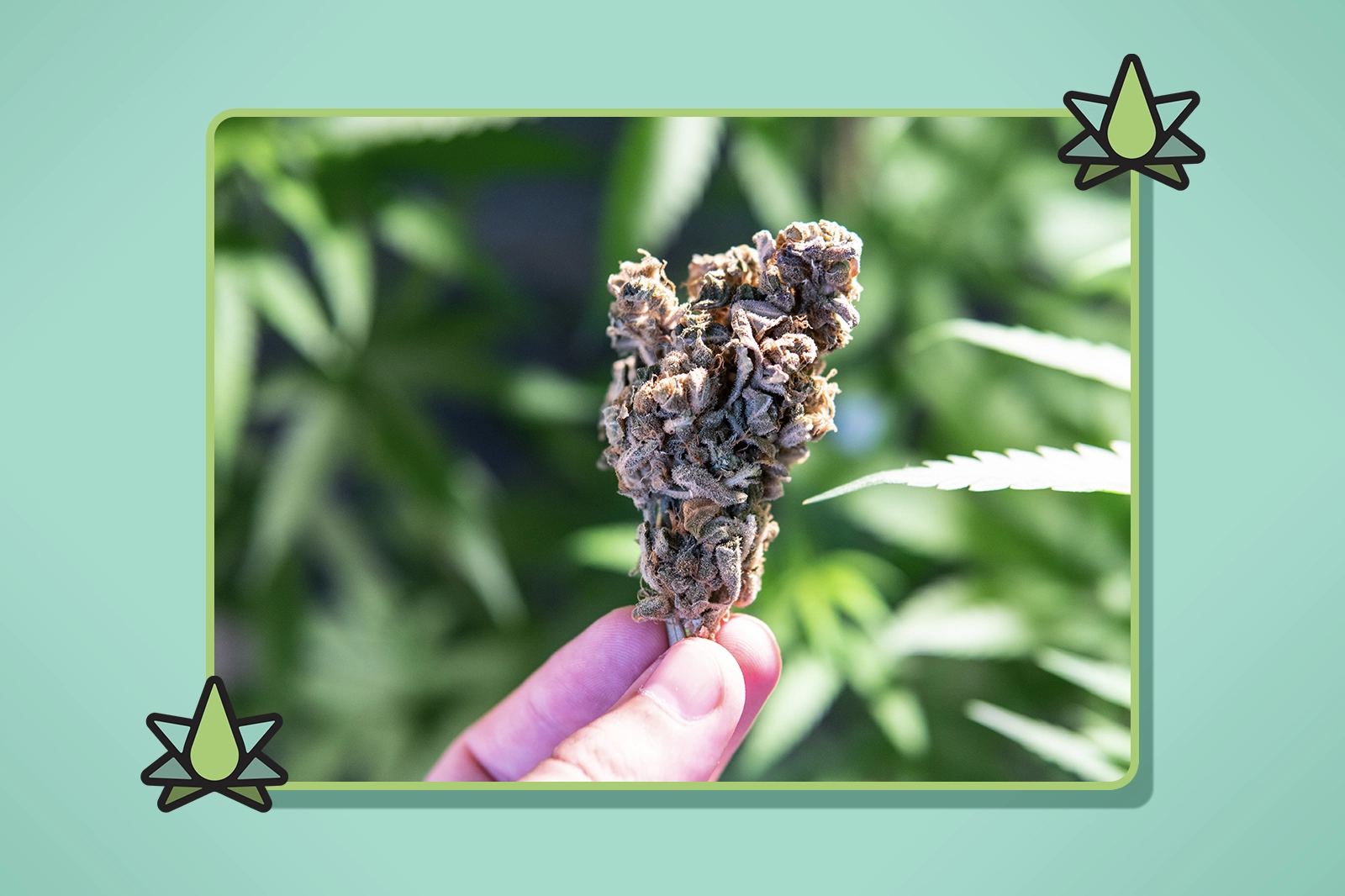
Quick Answer: Beta-caryophyllene is a sesquiterpene found in many cannabis terpene profiles that stands out because it selectively activates CB2 receptors without causing psychoactive effects. This interaction is associated with anti-inflammatory, analgesic, and stress-support benefits, making it valuable for wellness, topical, and vape formulations. Its high boiling point (~266 °C) also makes it more thermally stable than lighter terpenes, allowing it to survive heating and maintain aroma and functionality across multiple product formats when properly stored and protected from oxidation.
Key Takeaways
- Beta-caryophyllene (BCP) is a bicyclic sesquiterpene and selective CB2 receptor agonist, typically representing 8–22%+ of cannabis terpene fractions and offering non-psychoactive activity.
- Its high boiling point of approximately 266°C provides greater thermal stability than monoterpenes, making it suitable for vape, concentrate, and topical formulations.
- Preclinical research links BCP to anti-inflammatory, analgesic, and anxiolytic effects via CB2 and peroxisome proliferator-activated receptor gamma (PPAR-γ) pathways without CB1 activation.
- In cannabis flower, BCP ranges from 0.02–8.2% dry weight, while concentrated extracts may contain 10–22%+ of total terpene content, requiring batch-level COA consistency.
- Oxidation converts BCP to caryophyllene oxide, increasing allergenicity risk; nitrogen headspace purging, dark containers, storage below 15°C, and 0.1–0.2% tocopherol stabilization reduce degradation.
- Shop R&D samples from Terpene Belt Farms to evaluate COA-verified, caryophyllene-forward profiles that support stable, CB2-aligned product development across vape, topical, and ingestible formats.
What Is Caryophyllene and Why Does It Matter for Formulators
Caryophyllene comes up constantly in terpene conversations, but it is often treated as a background character. You see it listed as a secondary or tertiary terpene behind myrcene or limonene, sometimes without much discussion of what it actually does or how it behaves in a formulation. That framing undersells it significantly.
For product developers specifically, caryophyllene is one of the most technically interesting terpenes in the cannabis plant. It contributes a warm, spicy, peppery aromatic note that anchors gas and savory profiles.
More importantly, it carries a pharmacological profile that no other terpene can claim. Getting familiar with its chemistry is not just academic; it directly informs better formulation decisions.
Beta Vs. Alpha-Caryophyllene: Clearing Up the Isomer Confusion
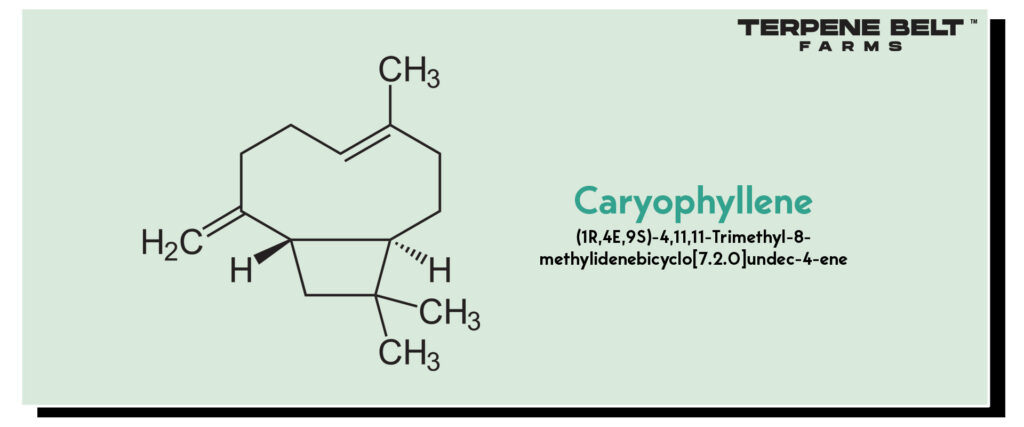
When most formulation guides reference “caryophyllene,” they mean beta-caryophyllene (β-caryophyllene). Alpha-caryophyllene is more commonly known as humulene, a related but distinct sesquiterpene with its own aromatic and functional characteristics. The two are often found together in cannabis profiles, which can cause confusion on COAs when both are listed.
Beta-caryophyllene is the pharmacologically active form. It is the isomer that binds CB2 receptors, carries the documented anti-inflammatory activity, and drives the peppery, woody aroma associated with caryophyllene-dominant cultivars.
When evaluating a terpene COA for formulation purposes, confirming you’re looking at beta-caryophyllene specifically matters.
- CB2 Binding: Beta-caryophyllene is a confirmed CB2 receptor agonist. Humulene (alpha-caryophyllene) has no established CB2 binding activity.
- Aroma: Beta-caryophyllene reads as peppery, spicy, and woody. Humulene is drier and more herbal, closer to hops or earthy wood.
- Concentration in Cannabis: Beta-caryophyllene typically appears at higher percentages in the terpene fraction. Humulene is usually a secondary or minor co-terpene.
- COA Labeling: Some labs list humulene as alpha-caryophyllene. If your COA shows both “caryophyllene” and “humulene” as separate entries, they are referring to the beta and alpha isomers, respectively.
- Formulation Function: Beta-caryophyllene is the compound behind CB2-mediated effect claims. Humulene contributes a dry, herbal aroma character and mild appetite-suppressing associations, but cannot substitute for BCP in functional formulations.
Why the Sesquiterpene Classification Changes Everything
The most common cannabis terpenes, myrcene, limonene, pinene, and terpinolene, are monoterpenes made from two isoprene units (C10). Caryophyllene is a sesquiterpene built from three isoprene units (C15). That extra molecular weight has direct formulation consequences.
Sesquiterpenes are less volatile. They evaporate more slowly, resist thermal degradation at higher temperatures, and persist longer in finished products than their monoterpene counterparts.
For vape manufacturers, this means caryophyllene survives heating cycles that would degrade lighter terpenes. For topical and concentrate formulators, it means longer aromatic shelf life and more stable functional delivery. The extra molecular mass is genuinely useful in production-scale work.

Caryophyllene Effects: What the Research Actually Shows
Caryophyllene has accumulated a notable body of preclinical research. Most other terpenes lack a clearly defined receptor target, which makes it difficult to draw direct lines between their presence in a formulation and any specific effect.
Caryophyllene does not have that problem. Its CB2 binding has been well-characterized, and from that mechanism, multiple downstream effects have been studied. The following is grounded in published science, not marketing language.
CB2 Receptor Agonism: The Mechanism That Sets It Apart
Beta-caryophyllene is recognized as a full selective functional agonist on CB2 receptors and produces therapeutic effects by activating CB2 and the nuclear receptors peroxisome proliferator-activated receptors (PPARs).
CB2 receptors are distributed primarily in immune and peripheral tissues, not in the central nervous system the way CB1 receptors are. This is why caryophyllene produces no psychoactive effects despite binding the endocannabinoid system.
Beta-caryophyllene is on the list of food additives and flavoring agents approved by the United States FDA, and studies in animal models have demonstrated a wide variety of pharmacological activities. The FDA approval gives formulators working in CPG, beverage, and wellness categories a meaningful compliance advantage when incorporating caryophyllene-forward profiles.
Anti-Inflammatory and Analgesic Activity
The anti-inflammatory pathway is where caryophyllene’s research base is most developed. Beta-caryophyllene is a cannabinoid receptor 2 (CB2) agonist that tempers inflammation, and studies show it significantly reduces pro-inflammatory cytokines such as TNF-α, IL-6, and IL-1β while increasing the anti-inflammatory cytokine IL-13.
On the analgesic side, orally administered beta-caryophyllene reduced inflammatory pain responses in a CB2 receptor-dependent manner, and chronic oral administration attenuated thermal hyperalgesia and mechanical allodynia while reducing spinal neuroinflammation, with no signs of tolerance development after prolonged treatment.
For formulators building wellness products targeting physical discomfort, that tolerance profile is a meaningful differentiator compared to many pharmaceutical options.
Anxiolytic and Mood-Related Properties
Among the most promising natural CB2R ligands, beta-caryophyllene has emerged as an excellent anti-inflammatory and antioxidant therapeutic agent with immunomodulatory properties, highlighting its therapeutic potential for the management of depression and anxiety. The mechanism here runs through CB2 signaling alongside serotonergic and GABAergic modulation — multiple pathways rather than a single receptor hit.
Research suggests that these effects manifest without the sedation or impairment associated with CB1-active compounds. For product developers in the mood and stress category, caryophyllene-forward profiles offer a credible, research-backed angle that does not require cannabinoids to be present in the formulation at all.
| Effect / Property | Mechanism | Key Finding | Formulation Relevance |
| CB2 Receptor Agonism | Selective CB2 receptor agonist; also activates PPARs | Interacts with the endocannabinoid system without psychoactive effects | Enables endocannabinoid-related positioning in non-intoxicating products |
| Regulatory Status | Recognized food flavoring compound | FDA-approved as a food additive | Advantage for CPG, beverage, and wellness formulations |
| Anti-Inflammatory Activity | CB2 signaling modulates cytokine pathways | Reduces TNF-α, IL-6, IL-1β and increases IL-13 | Supports inflammation-focused wellness positioning |
| Analgesic Effects | CB2-mediated pain modulation | Reduces inflammatory pain and neuroinflammation with no tolerance observed in studies | Useful for comfort and recovery formulations |
| Mood & Stress Support | CB2 activity with serotonergic and GABAergic modulation | Research suggests anxiolytic and antidepressant potential | Relevant for mood and stress-oriented products |
| Non-Psychoactive ECS Interaction | CB2 activation without CB1 stimulation | No intoxication or cognitive impairment | Allows cannabinoid-adjacent benefits without cannabinoids |
Caryophyllene in Cannabis: Strain Profiles and Natural Concentration Ranges
Knowing what caryophyllene does is only half the picture. Where it naturally shows up in cannabis, at what concentrations, and alongside which co-occurring terpenes shapes how you work with it at the formulation stage.
Concentration Ranges: What to Expect in Real Cannabis Profiles
Beta-caryophyllene concentrations in cannabis vary depending on the strain, usually ranging from 0.02% to 8.2% of dry weight, though some cultivars contain significantly higher concentrations.
When working with concentrated cannabis-derived terpene extracts rather than raw flower, caryophyllene often registers as a dominant fraction, sometimes representing 10–22%+ of the total terpene profile.
What this means for formulators is that sourcing consistency matters a great deal. A profile where caryophyllene represents 17% of the composition in one batch and 9% in another will produce a meaningfully different finished product. COA-verified batch consistency is not optional when caryophyllene is carrying functional claims in your product formulation.
Strains Known for High Caryophyllene Expression
Several cultivars are widely associated with elevated caryophyllene content. These include:
- GSC (Girl Scout Cookies): Earthy, sweet profile with caryophyllene contributing peppery depth and body-focused effects.
- Chemdog: Sharp diesel aroma with caryophyllene anchoring the spicy, fuel-forward character alongside myrcene.
- Bubba Kush: Coffee and chocolate notes where caryophyllene and humulene combine for a savory, grounding profile.
- OG Kush: Classic gas-forward strain where caryophyllene plays a supporting role to myrcene but significantly influences effect profile.
- Sour Diesel: High limonene drives the citrus-fuel aroma, but caryophyllene contributes the earthy, peppery undertone.
Each of these represents a distinct formulation direction depending on which co-occurring terpenes accompany the caryophyllene fraction.
How Caryophyllene Interacts With Co-Occurring Terpenes
Caryophyllene is rarely found alone at high concentrations. Its most common pairings in cannabis-derived profiles are myrcene, limonene, humulene, and linalool. Each combination shifts the formulation profile meaningfully.
Caryophyllene with myrcene produces a heavier, more sedative-leaning profile well suited to evening-use concentrates and relaxation formats. Caryophyllene paired with limonene creates a brighter, more uplifting character that works well in daytime wellness and mood products.
When humulene is also present, the profile takes on a drier, more herbal quality that resonates in savory and functional wellness positioning. These co-terpene relationships are why looking at the full profile matters more than isolating a single number on a COA.
Formulation Tips: How to Work with Caryophyllene Profiles Effectively
Caryophyllene’s technical advantages are real, but they only translate into finished product quality if the formulation process accounts for how the compound actually behaves.
The variables that trip formulators up most often are thermal management, dosage calibration by format, and oxidation-induced degradation.
Thermal Stability and Boiling Point Considerations
Beta-caryophyllene’s high boiling point of 266°C provides exceptional thermal stability compared to monoterpenes that degrade at normal vaping temperatures.
This is one of the most practically useful properties caryophyllene brings to vape formulations. Where monoterpenes like myrcene begin to degrade at temperatures commonly reached in standard cartridge operation, caryophyllene stays intact.
That said, thermal stability does not mean thermal insensitivity. Vaping temperatures for optimal delivery are generally recommended in the 165–180°C range. Running cartridges significantly above that threshold does not improve caryophyllene delivery.
It accelerates oxidation to caryophyllene oxide, which has a different and more skin-reactive profile. For hardware pairing, ceramic coil systems handle sesquiterpene-heavy formulations better than cotton wicks, which tend to absorb and trap heavier molecular weight fractions.
Dosage by Product Format
Caryophyllene concentration targets vary significantly by format. These are general benchmarks based on industry practice:
- Vape Cartridges: 5–10% total terpene load; within that, caryophyllene-forward profiles often fall at 15–22% of the terpene fraction, contributing ~0.75–2.2% of the final fill weight.
- Concentrates: 2–5% total terpene integration; caryophyllene’s stability makes it well-suited to the heat exposure some concentrate formats require.
- Topicals: Total terpene load should stay under 3% to avoid skin irritation; caryophyllene’s biocompatibility and penetration-enhancing properties at low concentrations make it one of the more forgiving terpenes in this category.
- Ingestibles and Tinctures: 1–3% total terpene in oil-based carriers; caryophyllene’s high lipophilicity means it disperses well in MCT and similar carrier oils without emulsification challenges.
For more detailed guidance on concentrate-specific integration parameters, check out our R&D guide for concentrates formulation.
Oxidation, Storage, and Shelf Life Management
The primary degradation pathway for beta-caryophyllene is oxidation to caryophyllene oxide. The oxide form has its own functional activity, including antifungal and analgesic properties, but the oxidized product caryophyllene oxide carries a higher risk of evoking an allergic response, which is a regulatory and consumer safety consideration for topical and ingestible applications.
To manage oxidation effectively, the following storage and stabilization practices apply:
- Container Type: Store in dark glass or aluminum containers. Translucent plastic allows UV exposure that accelerates oxidation, and certain plastics absorb sesquiterpenes over time, distorting the final terpene ratio.
- Headspace Management: Purge headspace with nitrogen before sealing. Oxygen trapped above the liquid is the primary driver of caryophyllene oxide conversion during storage.
- Temperature: Keep storage temperatures below 15°C where possible. Even ambient warehouse temperatures accelerate degradation in unsealed or partially used containers.
- Antioxidant Stabilization: Add 0.1–0.2% tocopherol derivatives to finished formulations. Accelerated aging data shows this approach significantly reduces oxidation rates over a six-month period compared to unstabilized controls.
- Topical Priority: These steps are most critical in topical formulations, where oxidized terpene content has the most direct and prolonged contact with sensitive tissue.
Topical Applications: a Unique Opportunity
Caryophyllene stands out among terpenes in topical formulations for a reason that goes beyond anti-inflammatory activity. Transdermal experiments showed that beta-caryophyllene has a significant permeation-enhancing effect, and the reduction of skin barrier function it causes is reversible, with cytotoxicity significantly lower than conventional penetration enhancers like azone.
This makes it genuinely useful not just as an active ingredient but as a delivery-enhancing compound in topical matrices.
For formulators developing balms, salves, or transdermal patches, caryophyllene-forward profiles offer a rare dual function: the terpene itself carries CB2-mediated anti-inflammatory activity while simultaneously improving the penetration of co-formulated cannabinoids or other actives.
That is a meaningful formulation advantage that does not require additional penetration enhancers with worse safety profiles.
Terpene Belt Farms Caryophyllene-Forward Profiles Worth Evaluating
Sourcing the right caryophyllene-forward profile means matching composition to application and not just selecting the highest percentage. The profiles below represent distinct formulation directions depending on your product category and target effect.
Gas #707 leads with 27.42% myrcene alongside 11.55% limonene and 10.95% caryophyllene, with humulene and ocimene rounding out the profile. The myrcene dominance gives it a heavier, earthier base that caryophyllene anchors with peppery depth. This blend is well-suited to evening-use vapes, relaxation concentrates, and any format where a classic gas-forward character is the target.
Where Gas #10 skews dry and functional, 2024 Fruit #6 offers a more approachable direction for formulators working in fruit-forward categories. Limonene leads at 25.41% with caryophyllene at 16.05% and linalool at 4.42%. The linalool addition is worth noting. It softens the peppery edge with a light floral character that makes this profile a natural fit for mood-focused edibles, gummies, and ingestible wellness formats where a heavy gas note would be out of place.
If the goal is fruit-forward character with a solid caryophyllene contribution, 2024 Fruit #135 offers a clean starting point. Limonene leads at 24.04%, caryophyllene sits at 15.13%, and pinene at 5.23% adds a resinous lift that keeps the profile from going heavy, well-suited to functional fruit vapes or edibles where approachable aroma matters.

Why Terpene Belt Farms Is the Right Partner for Caryophyllene-Forward Product Development
Caryophyllene-forward formulations require more than a terpene supplier that can ship a bottle with the right label. When you’re building products where caryophyllene is carrying actual functional claims, batch-to-batch consistency in the terpene fraction isn’t a preference; it’s a product integrity requirement.
Terpene Belt Farms extracts directly from California-grown Cannabis Sativa L plants using methods that preserve the full sesquiterpene fraction, including caryophyllene, in its native ratio context.
Every profile ships with detailed COA documentation, so your team can verify composition, not just trust a spec sheet. The catalog covers caryophyllene-forward options across savory, gas, fruit, and sweet aromatic directions, giving R&D teams multiple starting points depending on the product format.
And because TBF sources from cultivated, traceable plant material rather than blended botanicals, you’re not approximating a profile. You’re working with the real thing.
If you’re developing a product line where caryophyllene is central to your effect story, request samples for R&D and evaluate the profiles that fit your format before committing to production volumes.
Frequently Asked Questions About Caryophyllene
Is Beta-Caryophyllene Psychoactive?
No. Beta-caryophyllene binds exclusively to CB2 receptors, which are found primarily in immune and peripheral tissues rather than in the central nervous system. CB2 activation does not produce the psychoactive effects associated with CB1 receptor binding by THC. This makes caryophyllene-forward profiles suitable for products where non-intoxicating positioning is a requirement.
What Does Caryophyllene Smell Like in a Finished Product?
Caryophyllene contributes a warm, spicy, peppery aroma with woody and slightly earthy undertones. At higher concentrations, it reads closer to black pepper or clove. When present alongside limonene or myrcene, the peppery character softens into a supporting aromatic note rather than dominating the profile.
How Does Caryophyllene Behave in Water-Based Formulations?
Caryophyllene is highly lipophilic and does not disperse in water without emulsification. For beverages or water-based topicals, standard emulsification techniques are required. Its sesquiterpene molecular weight actually makes it more stable in aqueous systems than many monoterpenes once properly emulsified, with lower hydrolysis risk over shelf life.
What Is Caryophyllene Oxide and Should I Be Concerned About It?
Caryophyllene oxide is the primary oxidation product of beta-caryophyllene. It forms when caryophyllene is exposed to oxygen, light, or heat over time. While it carries its own antifungal and analgesic activity, it has a higher allergenicity risk than the parent compound — particularly in topical applications. Proper storage protocols and antioxidant stabilization minimize the conversion rate.
How Do I Know If a COA Is Listing Beta-Caryophyllene or Humulene?
Some COAs list alpha-caryophyllene, which is the same compound as humulene. When reviewing a terpene COA, confirm that beta-caryophyllene (or β-caryophyllene) is listed separately from humulene or alpha-caryophyllene. If the report only lists “caryophyllene” without specifying the isomer, request clarification from the supplier before making formulation decisions.
Can I Use Caryophyllene-Forward Profiles in Edibles?
Yes. Beta-caryophyllene is FDA-approved as a food additive and flavoring agent. It is lipophilic and disperses well in oil-based edible carriers like MCT, coconut oil, and infused butter bases. Dosage for ingestibles is generally lower than inhalation formats, starting at 1–3% total terpene in the carrier oil, due to the higher bioavailability profile of oil-based oral delivery.
Sources Used for This Article
- PubChem: “(-)-Caryophyllene” – pubchem.ncbi.nlm.nih.gov/compound/Caryophyllene
- PubMed: “β-Caryophyllene, a CB2 receptor agonist produces multiple behavioral changes relevant to anxiety and depression in mice” – pubmed.ncbi.nlm.nih.gov/24930711/
- PMC: “Effect of β-Caryophyllene on PPAR-γ, NF-κB, and CNR2: Implications for Gut–Brain Axis Communication in a Murine Model of Diet-Induced Obesity” – pmc.ncbi.nlm.nih.gov/articles/PMC12565869/
- PMC: “β-caryophyllene, an FDA-Approved Food Additive, Inhibits Methamphetamine-Taking and Methamphetamine-Seeking Behaviors Possibly via CB2 and Non-CB2 Receptor Mechanisms” – pmc.ncbi.nlm.nih.gov/articles/PMC8458938/
- PMC: “Beta-caryophyllene as an antioxidant, anti-inflammatory and re-epithelialization activities in a rat skin wound excision model” – pmc.ncbi.nlm.nih.gov/articles/PMC8831077/
- PubMed: “The cannabinoid CB₂ receptor-selective phytocannabinoid beta-caryophyllene exerts analgesic effects in mouse models of inflammatory and neuropathic pain” – pubmed.ncbi.nlm.nih.gov/24210682/
- ScienceDirect: “The expanding genetic landscape of myoclonus-dystonia syndrome: YY1 and ATP1A3 are added to the list” – sciencedirect.com/science/article/abs/pii/S1353802023009859